Read Time:2 Minute, 40 Second
Retail sales in the US were unexpectedly flat during the December holidays, suggesting a pullback among consumers and raising questions about a broader economic slowdown.
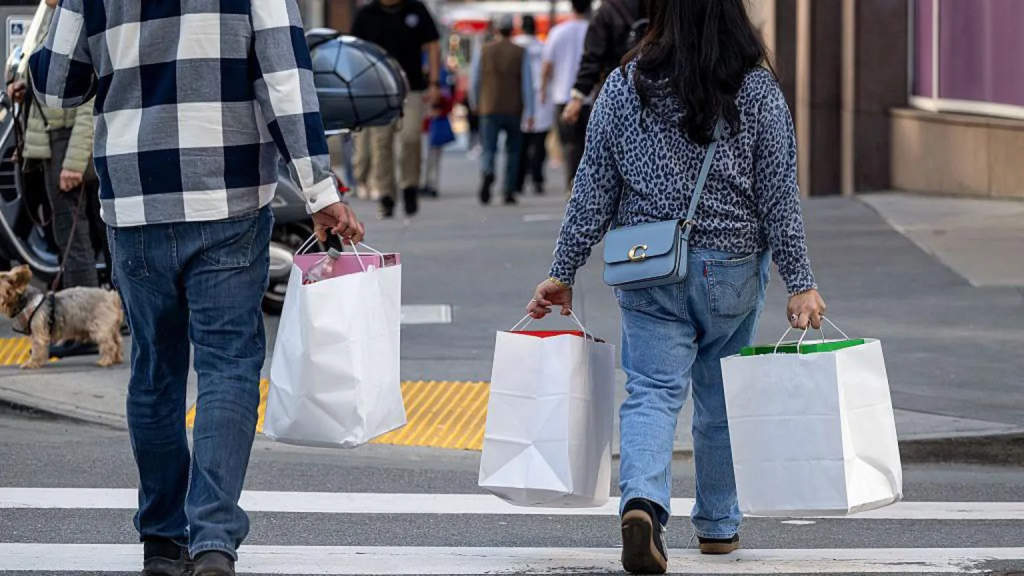
The report, released on Tuesday by the Commerce Department, marks a break from relatively robust spending in recent months. Americans had continued to open their wallets even as sentiment about the economy dimmed.
But a faltering labour market, persistent inflation and cooling wage growth contributed to a lacklustre end to the year. Retail sales were unchanged from the previous month, after a 0.6% increase in November.
Still, economists cautioned that the weak December data might not point to a sustained downturn.
The data, which had been delayed because of last year’s government shutdown, comes amid a slew of upcoming economic releases, including a report on the labour market on Wednesday and fourth-quarter economic growth estimates next week.
Taken together, the reports could offer a clearer picture of the strength of the world’s largest economy amid concerns about underlying weakness.
Several consumer categories – many of which are exposed to tariffs – saw a drop-off in spending at the end of 2025. Furniture store sales fell 0.9% month-over-month, while sales at clothing retailers declined 0.7%.
Overall, sales in December increased 2.4% year-over-year, down from an annual 3.3% increase in November.
Consumer spending is in many ways the backbone of the US economy, accounting for more than two-thirds of economic activity.
“Consumer spending has finally caught up with consumer sentiment, and not in a good way,” said Chris Zaccarelli, chief investment officer for Northlight Asset Management.
“This month’s data show that consumers are no longer relentlessly increasing their level of spending,” he added.
Whether the sluggish spending persists – or instead is just a temporary blip – remains to be seen.
Fears of a labour market slowdown, which gripped consumers, economists and central bankers last year, have eased in recent weeks. The number of jobs created in the US grew only modestly in December, but the unemployment rate dipped to 4.4%.
If the labour market holds up, consumer spending might bounce back, said Michael Pearce, chief US economist at Oxford Economics. Tax returns and the effects of the Federal Reserve’s three interest rate cuts last year could also offer a boost.
“We suspect that weakness is temporary, with the larger tax refund season and a stabilisation in labour market conditions likely to drive a rebound in spending through the spring,” Pearce said.
The retail sales report reinforced a growing divide in the US economy between higher-earners and those struggling to get by, analysts noted.
High-income consumers continue to drive spending as the stock market hits new records.
At the same time, the Labor Department on Tuesday reported that wage growth slowed to 0.7% in the fourth quarter of last year – the slowest pace in more than four years.
Many Americans are “increasingly shifting toward the economics of necessity”, said Gregory Daco, chief economist at EY-Parthenon. He pointed to a sales uptick in December in categories like gasoline and building materials, but a drop in discretionary products such as electronics and clothing.
Reproduced from the BBC


Happy
0 %

Sad
0 %

Excited
0 %

Sleepy
0 %

Angry
0 %

Surprise
0 %
 0
0
 0
0