Read Time:4 Minute, 4 Second
The political left and right are roughly equal in size, which sets the United States apart from most other countries.
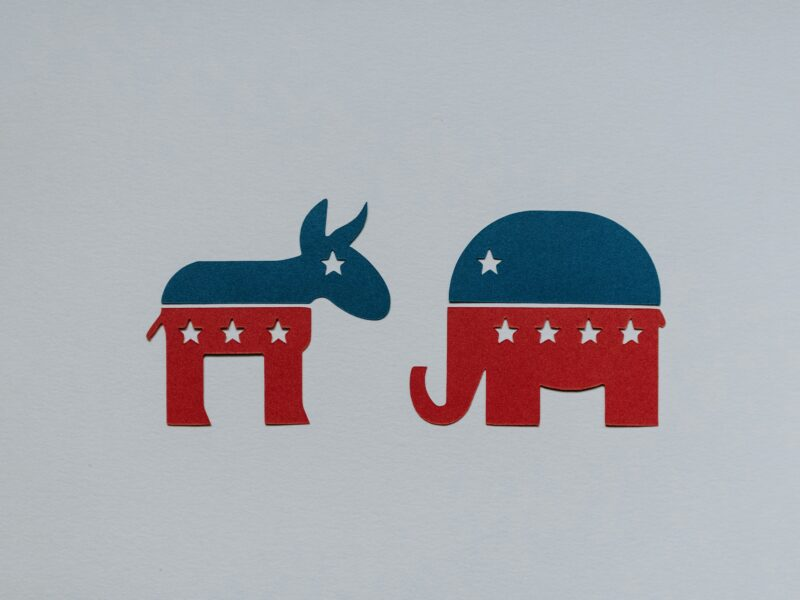
Political division has become a defining feature of American life, shaping elections, public discourse and even personal relationships. New research suggests much of that split is not the result of a slow, steady drift over decades, but a more recent shift that accelerated after 2008.
Researchers tracking U.S. political attitudes over nearly four decades found that divisions between Americans on social and political issues have grown by 64% since 1988, with almost all of that increase occurring from 2008 onward. They say that year marked a clear turning point in how Americans line up on issues that now dominate national debate.
The analysis was conducted by the University of Cambridge’s Political Psychology Lab and published Tuesday in Royal Society Open Science. Researchers examined more than 35,000 survey responses collected between 1988 and 2024 through the American National Election Studies, which has tracked US public opinion since 1948.
“Our study shows that 2008 was a major turning point for the divisions between left and right on many of the issues that define contemporary US politics,” said senior author Lee de-Wit, who leads Cambridge’s Political Psychology Lab, in a press release.
Researchers found that political polarization was largely flat through the 1990s and early 2000s, then began to climb steadily after 2008, the year of the global financial crisis, Barack Obama’s election and the rapid spread of smartphones and social media.
Most of that shift, researchers say, has been driven by the American left moving in a more socially liberal direction, rather than the right becoming dramatically more conservative.
Based on the issues surveyed, the US left was 31.5% more socially liberal in 2024 than in 1988. Over the same period, the US right was only 2.8% more conservative.
“Although sentiment varies by topic, the American public has moved left on many issues during the 21st century,” de-Wit said. “This shift may surprise those familiar with the rightward turn of Republican leaders over the same period, as well as recent U.S. headlines.”
“Right-leaning Americans have remained fairly stable in their positions for the last 35 years, and may feel left behind as half the country has shifted towards an ever more progressive outlook on many issues,” he added.
The findings suggest that resentment toward a perceived progressive or “woke” left may help explain recent political successes on the right.
“Part of the recent success of the US right may be their ability to tap into outgroup animosity for a perceived ‘woke’ left, rather than a firm belief in some of the more extreme right-wing positions adopted by the Republican leadership,” de-Wit said.
Unlike many past studies that rely on people’s self-described party or ideological labels, the Cambridge team used machine-learning techniques to analyze opinions directly. They applied clustering algorithms to group people based on their answers to questions about economics, race, equality, abortion, traditional values and other core issues.
“There can be various reasons why voters feel they belong in a particular party, from media they consume to communities in which they live, even if many of their attitudes don’t fit,” said lead author David Young, of Cambridge’s Department of Psychology, in the press release. “Clustering algorithms provide an objective, bottom-up way to analyse shifts in political opinion beyond the ideologies of national parties and the self-identification of voters.”
Some of the largest changes occurred around abortion and traditional family ties, where progressive attitudes widened divisions from what had been a relatively narrow consensus in the late 1980s. Views on health insurance and discrimination against African Americans also shifted substantially, with people on both sides moving further apart.
At the same time, researchers found a sharp rise in what they call “sorting,” the tendency for people to adopt party and ideological labels that match their views.
By 2024, far more people who fall into the left-leaning cluster described themselves as Democrats or liberals than they did in 1988, while increases on the right were smaller but still significant.
“Sorting increases the difference between Democrats and Republicans even when attitudes don’t change much, so it can be hard to gauge what is driving political polarization,” de-Wit said. “Using machine learning, we can see that both are happening.”
Despite the widening gap, researchers found that the U.S. left and right remain roughly equal in size, a pattern that sets the United States apart from most other countries.
“The United States is unusual in having a left and a right of roughly equal size,” Young said. “This has been the case for a long time, and it may help explain why polarization in the U.S. feels so intense.”
Reposted from Court News


Happy
0 %

Sad
0 %

Excited
0 %

Sleepy
0 %

Angry
0 %

Surprise
0 %
 0
0
 0
0