Read Time:4 Minute, 0 Second
Asia’s growing soft-power, led most visibly by Japan and South Korea through cultural exports such as anime and K-pop, has helped drive global interest in the region and intensified competition for tourists within it.
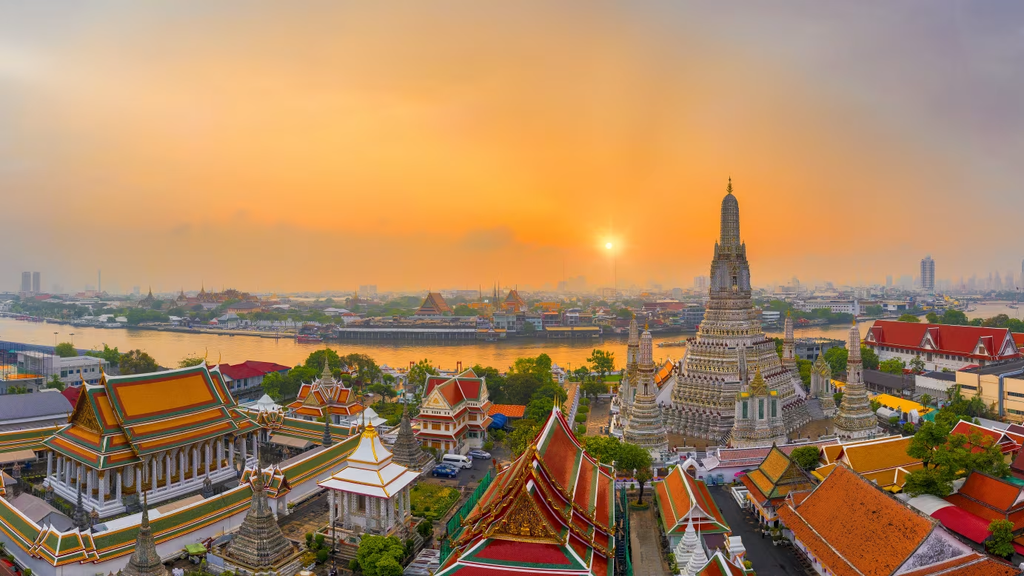
In Southeast Asia, Thailand has long been the destination of choice for many travelers, but by investing in infrastructure, introducing flexible visa policies, and expanding aviation access, neighboring countries have gained ground. Malaysia in June overtook Thailand as the regions’ most visited nation. To regain momentum, the Thai government and its citizens are reintroducing the country to the world and diving into their soft power strengths.
Thailand’s “T-wave,” a term used to describe the country’s soft power influence has recently grown. Once primarily defined by Thai food, in 2023, under former Prime Minister Srettha Thavisin, the National Soft Power Strategy Committee (NSPSC) was created to focus on 13 key areas including food, festivals, music, film, fashion, and tourism.
In the years since, the Thai government has supported initiatives in the film industry, providing cash rebates for production crews’ local spending and hiring. These policies have attracted multimillion-dollar projects such as season three of HBO’s “The White Lotus” and Universal Pictures’ “Jurassic World: Rebirth,” whose productions used the country’s tropical backdrops. HBO, like CNN, is owned by Warner Bros. Discovery.
The effect was immediate and impactful. Filmed on Koh Samui, “The White Lotus” drove an 88% jump in online searches and a 300% tourism increase to the island.
“We’ve seen a very strong upsurge in entertainment media that has really continued to drive the narrative of Thailand tourism,” says Steve Johnson, an executive at the Tourism Authority of Thailand’s branch in New York.
When speaking about Thai entertainment, Lalisa Manobal is often mentioned. The music megastar known globally as LISA, made her acting debut in season three of “The White Lotus” but already had an international following as a member of the girl group BLACKPINK. Her solo release “SaWaDiKa,” titled after a Thai female greeting, amassed over 100 million views on YouTube within two days of its release in September.
“If I ask almost anybody on the planet, ‘What is Thailand?’ They will probably mention Lalisa,” says Dr. Daniele Carminati, a lecturer at Mahidol University International College (MUIC) in Salaya township, who specializes in soft power and public diplomacy. Similar to BTS in Korea, he says LISA shows how cultural figures can carry a country’s image across borders.
Featuring Muay Thai martial arts fighters, tuk-tuks, and traditional Thai dress, the “SaWaDiKa” music video makes familiar cultural symbols accessible to millions through a global pop package.
Where Thailand and its culture are becoming increasingly accessible to new audiences through global and domestic dramas, films, and music, experienced travelers in Thailand are often drawn to its wellness options. The country’s tourism board sees it as a competitive advantage within the region.
“We are the mecca in Southeast Asia as it pertains to wellness,” says Johnson, alluding to Thailand’s place as the seventh-fastest growing wellness market in the $6.8 trillion wellness economy.
From hot springs, to detox retreats and herbalist practices, wellness in Thailand extends far beyond massages or yoga at luxury resorts. From Chiang Mai to Hua Hin, “Everywhere [in Thailand] has a unique wellness feature that they promote,” says Johnson. In a 2025 speech, the current Prime Minister Paetongtarn Shinawatra said, “we are positioning Thailand as a global wellness hub, offering not just treatment but an experience of better well-being.”
The question is, whether cultural appeal can translate into longer-term economic benefits. Although the T-wave is closely modeled after the K-wave in South Korea, it remains to be seen whether Thailand can emulate Korea’s economic success.
Speaking about the country’s prospects, William J. Jones, an assistant professor of international relations at MUIC, says, “Thailand has incredible potential. Its historical strength is being an open society, an open economy, welcoming to people,” which can attract tourists and businesses alike. But he cautions that tourism-led growth can be fragile, and going beyond it requires broader economic development, government investment and policy execution.
Thailand wants to be “a digital hub, an AI hub, an aviation hub,” says Jones, but so do many of its neighbors. The difference, he suggests, will come down to implementation.
For all of Thailand’s technology and tourism ambitions, its more distinctive advantage may be one that is more difficult to engineer: the culture that travelers encounter on the ground. Turning that appeal into a lasting economic influence may depend on whether Thailand can build on what already draws people to it.
Thailand’s enduring power, says Jones, is still “its culture, its food, its landscape.”
Reprinted from CNN


Happy
0 %

Sad
0 %

Excited
0 %

Sleepy
0 %

Angry
0 %

Surprise
0 %
 0
0
 0
0