Read Time:4 Minute, 59 Second
Rising mortgage rates are lowering the odds of prospective homebuyers entering the market and adding to the tough economic slate for President Trump and the GOP just weeks ahead of the midterms.
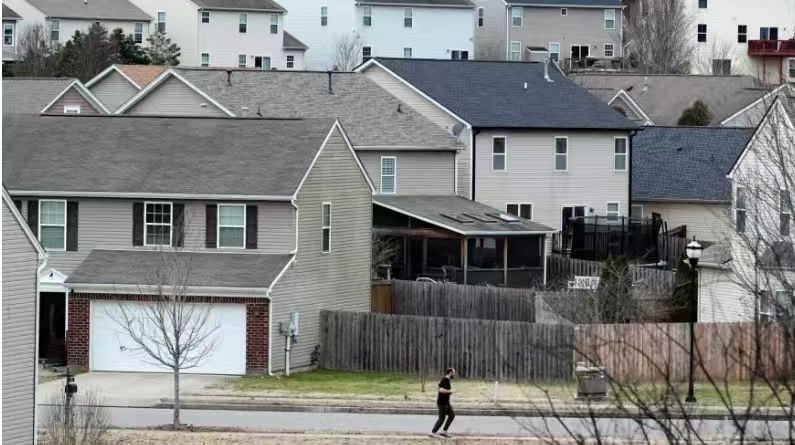
The average 30-year fixed mortgage rate was 7.28 percent last week — the highest mark since late November 2023, according to data from Freddie Mac. The average rate also rose by a quarter point from the week prior, the largest week to week increase in four-plus years.
Rising mortgage rates are part of a rough financial ledger for Trump and Republicans, as inflation remains above 3 percent and fuel prices stay high amid the Iran war.
“Economy, cost of living, that kind of congealing will be [important], certainly it has been for the last … two years, for voters in ’26,” GOP strategist Matt Gorman told The Hill.
Experts point to multiple factors as to why mortgage rates have shot up above 7 percent. Lawrence Yun, the chief economist at the National Association of Realtors (NAR), noted increased energy prices during the Iran conflict have pushed up inflation.
Annual inflation, as measured by the personal consumption expenditures price index, has surged from 2.8 percent in February to 3.4 percent in August, according to data from the Bureau of Economic Analysis.
The upticks in prices track with rising mortgage rates. The average 30-year rate, after sinking by 28 basis points from the week before Thanksgiving 2025 to late February 2026, has risen by nearly 1.3 percentage points since the week before the U.S. and Israel launched the Iran war.
Persistent inflation led to the Federal Reserve hiking interest rates by a quarter point last month. But the federal funds rate, which dictates what rates banks charge for overnight loans, does not directly impact mortgage rates.
Ali Wolf, the chief economist at Zonda and NewHomeSource, told The Hill that bond investors “already allocate their money accordingly” prior to a rate hike, with mortgage rates rising or falling as market participants anticipate the Fed’s next move.
Inflation, and how Fed officials address it, are not the only factors impacting mortgage rates.
Wolf highlighted investor concerns over government debt, which has led to a bond market sell-off and subsequent increases in yields.
The 10-year U.S. Treasury bond yield, which the 30-year mortgage rate tracks closely, hit a 24-year high last week and is still trading at more than 5.25 percent — an increase of roughly 130 basis points from before the Iran war started.
“Moreover, the huge rising federal budget deficit is gobbling up more of private savings and thereby leaving less capital for the mortgage market,” Yun, of the NAR, noted via email.
While the average 30-year mortgage rate sank below 3 percent during the pandemic, it has been above 5 percent since mid-August 2022.
During his last presidential campaign, Trump vowed to lower mortgage rates, predicting they would fall to 3 percent during his second administration.
“Young people will be able to buy a home again and be a part of the American Dream,” the president said in September 2024 at The Economic Club of New York.
At various points of his second term, Trump has centered housing policy in his economic agenda.
The president in January signed an executive order aimed at preventing Wall Street investors from purchasing single-family homes, although experts cautioned doing so would not greatly boost supply.
Trump also proposed — and then backed down from — the 50-year mortgage last year. The proposal would come with higher interest rates than the 30-year repayment plan.
But when Congress earlier this year passed the bipartisan 21st Century ROAD to Housing Act, Trump did not sign it in protest of GOP senators declining to change the filibuster rules to pass voter ID legislation.
The lengthy housing measure, which became law without Trump’s signature in July, intends to streamline the federal review process for new units and bans institutional investors from buying single-family homes, with an exception for build-to-rent properties.
The law will not lead to a decline in mortgage rates, however, Yun noted. While the law directs the Department of Housing and Urban Development to consider a pilot program for certain Federal Housing Association-backed mortgages, it is geared toward increasing housing supply to “lessen home price acceleration,” he wrote.
As for what will cause mortgage rates to decline in the short term, the NAR chief economist cited lower oil prices or a “job cutting economic recession.” Over the long term, he said the federal government reining in the deficit “to manageable levels” would lower them.
Until then, Wolf said the housing market is “already feeling the impacts” higher mortgage rates have on consumers.
“What we are telling our clients … is to expect these ‘higher for longer’ mortgage rates to hold,” Wolf noted, adding that rates could be between 6.5 percent and 8 percent for the next 12 months.
“Homes are sitting on the market longer, sellers are having to reduce their asking price, and consumers are deciding now might not be the right time to buy a house,” she said. “From a consumer point of view, they are dealing with the mental toll of higher costs across the economy as well as the financial one.”
Rising mortgage rates are just part of the broader economic landscape heading into the midterms, giving Democrats a chance to capitalize on Americans’ frustrations over high prices.
Gorman, the GOP strategist and chief communications officer at Targeted Victory, said housing will likely be “front and center” in the 2028 presidential race, arguing Democrats in Congress have “zero incentive” to team up with their Republican colleagues on another housing measure.
“Anything they even think about passing will not be good enough … for the [Democratic] presidential candidates,” Gorman told The Hill, adding he “certainly” does not see “anything getting done” on housing the next two years.
Reprinted from The Hill


Happy
0 %

Sad
0 %

Excited
0 %

Sleepy
0 %

Angry
0 %

Surprise
0 %
 0
0
 0
0