Read Time:1 Minute, 52 Second
The head of the U.S. Federal Aviation Administration said the agency expects about a $100 million cost from tariffs on the government’s more than $12.5 billion air traffic control modernization plan.
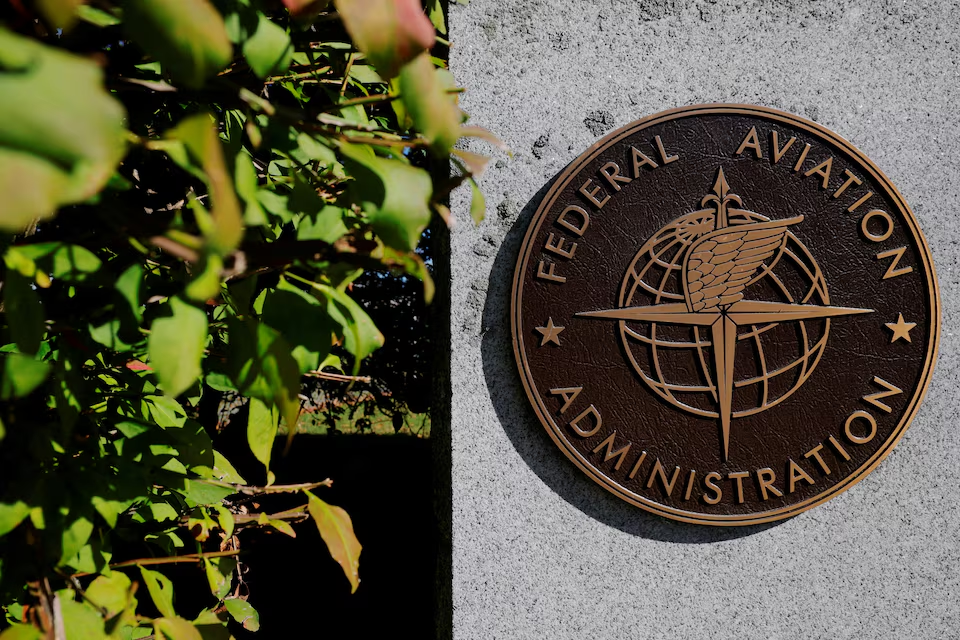
U.S. Representative Rick Larsen, a Washington Democrat who is ranking member of the committee overseeing the FAA, told Reuters that FAA Administrator Bryan Bedford informed lawmakers the $100 million tariff cost was largely due to air traffic radar systems they are purchasing. Larsen criticized the tariffs for increasing the government’s costs.
“I’ve asked them for specific amounts and what equipment is being impacted,” Larsen said. “I’m not a fan of tariffs. We’re trying to get the national aerospace system modernized and we’re going to pay tariffs because of the president’s policies.”
Congress approved $12.5 billion in funding last year to address the aging air traffic control system and boost controller hiring following decades of complaints about airport congestion and flight delays, as well as a series of technology issues in recent years. The FAA wants at least another $10 billion for phase two.
The cost of telecommunications upgrades has jumped from $4.75 billion to $5.91 billion, a government report said this week. Bedford said outdated telecom copper wires should be replaced by September 2027.
Bedford also said two radar suppliers, RTX’s (RTX.N), opens new tab Collins Aerospace and Spain-based Indra Group, were moving radar production to U.S. facilities in Largo, Florida, and Kansas, respectively. He did not say where the production was moving from.
In January, the FAA awarded $780 million in contracts to RTX and Indra to replace up to 612 ground-based radars, most of which date back to the 1980s. Bedford said earlier that many radars exceeded their intended service life and are increasingly expensive to maintain and difficult to support.
In March, RTX said it was investing $26.5 million in its Largo facility to expand production, while Indra said it was investing $7.5 million in its radar facility in a Kansas City suburb to build next-generation air traffic surveillance radars.
Indra is also building next-generation digital radios for the FAA at the Kansas site under a separate $244 million contract.
Reprinted from Reuters


Happy
0 %

Sad
0 %

Excited
0 %

Sleepy
0 %

Angry
0 %

Surprise
0 %
 0
0
 0
0