Read Time:3 Minute, 0 Second
As the U.S. prepares to celebrate its 250th birthday, a new poll finds Americans less likely to say that a democratically elected government is central to our national identity. It’s enough to make one semisqueamish about the semiquincentennial.
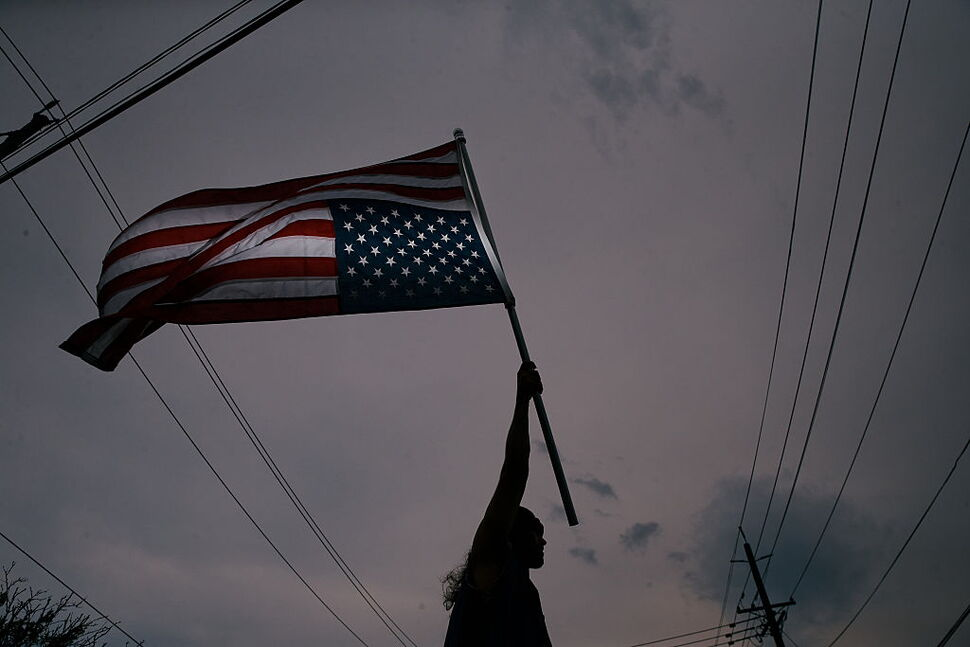
The Associated Press-NORC Center for Public Affairs Research poll notably reveals a generational gap, with young people much more likely to say having a republic is “not too or not at all” important to the United States’ identity. Twenty-one percent offer that bleak assessment.
Just 51% of 18-to-29-year-olds say it’s “extremely or very” important. Among all adults, the proportion is 66%, down from 80% in a similar survey in 2021. Americans 60 and over are the most sanguine about this notion, with 81% saying as much.
What this means for the future of our republic isn’t clear, but we’ve seen before that Americans are down on their national political institutions – the Supreme Court, newspapers, TV news, Congress and the presidency regularly take a drubbing in public opinion polls.
And 72% of respondents said the country is going in the wrong direction.
It would certainly seem to incentivize campaigning against “the system” anchored in Washington, D.C.
Taking Exception
That’s where the national birthday is effectively headquartered, with various celebrations on and around July 4. But as the country prepares to deck itself in red-white-and-blue bunting and chant “USA! USA!” our sense of exceptionalism could stand a tune-up, too.
Only about one-quarter of Americans say the U.S. is the greatest country in the world. Another 44% say it’s one of the greatest. About 3 in 10 say there are better countries – up from 19% in an AP-NORC poll from June 2016.
The American Dream – the notion that anyone, regardless of birth status, can succeed if they work hard – is also looking a little shabby. Fifty-one percent say it once held true but no longer does.
About one-third say it still holds true, while 15% say it was never true.
Here, again, we find a generational gap, with just 22% of under-30s saying it still holds true compared to 46% of those 60 and up.
A More Perfect Union?
Republicans are more likely to say America is No. 1 and the Dream is still true. The poll report did not give a party breakdown for belief that democratically elected leaders are vital to the American identity.
In a lot of ways, though, the story here isn’t the partisan divide so much as the generational malaise among younger Americans.
You can see it in the frustration of the recent college grad forced to move home because they can’t find a job. Or the young couple who cannot afford to buy a home while baby boomers sit on real estate that has built up value over decades.
As we have repeatedly noted in Decision Points, the definition of politics includes how a society organizes itself to allocate finite or scarce resources, manage internal disagreements and blunt external threats.
Young Americans aren’t the only generation facing challenges in a country where people express mistrust of major institutions, of course. But when young people lose faith in a system they see as not delivering for them, major social and political change may be inevitable.
And it could come in the form of populist upheaval … by people who don’t think democracy is essential to the identity of the country.
Reprinted from U.S. News & World Report


Happy
0 %

Sad
0 %

Excited
0 %

Sleepy
0 %

Angry
0 %

Surprise
0 %
 0
0
 0
0